Memory and forgetting
The Narrow Road to the Deep NorthMemory and forgetting are not simple opposites in the novel: forgetting can lessen the hold of loss and captivity, while public acts of remembrance can preserve some lives and leave others unrecorded. Dorrigo Evans’s fading memories of Amy Mulvaney continue to shape his choices even as he loses the details of their relationship. Jimmy Bigelow eventually forgets his experience as a prisoner of war, but retains a belief in human goodness. Set against these private transformations, the commemoration of the Death Railway reveals how remembrance can omit the dead and conceal responsibility.
Private memory and the persistence of absence
In the early years of his marriage to Ella, Dorrigo Evans repeatedly recalls Amy Mulvaney, though he cannot explain what he had known with her. He remembers their first meeting as an ordinary encounter: the beauty spot above her lip, a conversation that amused him, and his return to a shop for a book by Catullus. At first, he expects the meeting to become one of the passing experiences he would soon forget. Instead, Amy’s absence takes on a continuing force.
Over time, Dorrigo’s recollections become less frequent and less distinct. He finds that pursuing the past brings greater loss: a remembered gesture, smell, or smile seems to become fixed, then crumbles when he tries to hold it. Weeks pass without thoughts of Amy, then months. His memory of her gradually recedes, but the fading does not mean that her influence has ended.
Amy does not know that Dorrigo may have believed she died in the hotel explosion. She has long thought him dead, and when she learns that he survived, she interprets his failure to return as a broken promise. The novel places their incompatible understandings beside one another: each has lived with an absence whose explanation remained unknown to the other. Their later separation is thus sustained not only by what happened, but by what each has been unable to know about the other’s memory.
Marriage, habit, and the memory that remains
As Dorrigo’s memory of Amy diminishes, Ella becomes his closest ally and adviser. Their life together accumulates through raising children, practical support, private conversations, shared illness and grief, and daily acts of care. This long intimacy binds him to Ella, even as he experiences profound loneliness within the marriage. He repeatedly seeks relationships with other women, but those affairs do not relieve his solitude; the pattern instead intensifies it.
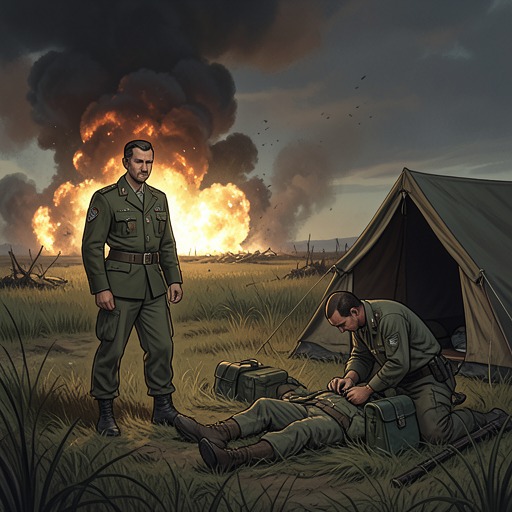
Amy’s absence continues to organize his choices without always appearing as a conscious recollection. Dorrigo refuses to visit Adelaide, even for major professional or veterans’ events. When he and Ella move into a new house in Toorak, he has a large red camellia removed, to Ella’s fury. The novel presents these decisions as traces of a past that has become difficult for him to remember directly. His infidelity, too, is described as an unwitting fidelity to Amy’s memory: the other women mean little to him, though he would have rejected that interpretation. Forgetting here does not erase the past; it allows the past to persist indirectly, in refusals and repeated conduct.
Captivity and the altered work of recollection
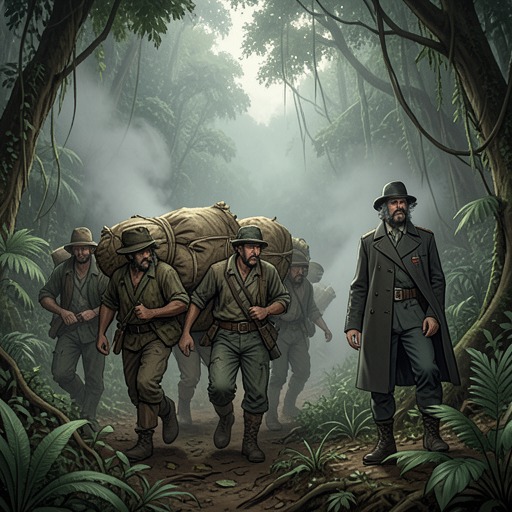
Jimmy Bigelow’s later memories preserve selected acts of kindness while losing the circumstances of captivity. He recalls the taste of the duck egg Darky Gardiner gave him, and remembers Wat Cooney as a man who waited at the cookhouse for the last person and tried to ensure everyone received food. Jimmy remembers the reluctance of the men gathered at Wat’s grave to be the first to throw a sod. Yet he does not remember that Wat died during the march to Three Pagoda Pass, or the cruelties accompanying it. For Jimmy, those events no longer define what was true of Wat.
As Jimmy grows older, his sons and other people correct inconsistencies in his accounts. He resists the expectation that his recollections should amount to a complete or consistent record. His experience at the camp is not preserved as a reliable chronology: it is transformed by what remains emotionally available to him. He also avoids books, documentaries, and historians that might bring painful memories back. In old age, the memories disappear in stages: first the humiliation of enslavement and violence, then sickness and death, then mud and hunger. Eventually he can remember none of his time as a prisoner of war, although he knows that it happened.
The loss of those memories does not leave Jimmy with nothing. What remains is an enduring conviction in human goodness, which he regards as undeniable and beautiful. At ninety-four, he is finally free of the experience’s recollections. He takes pleasure in weather, dawn, strangers’ smiles, friendship, and the birds that come to feed and rest in his yard. Their arrivals and departures become a way of seeing his own life. The ending makes forgetting neither a victory over history nor a restoration of what was lost; it is a change in what can be carried forward.
Public remembrance and its omissions
The novel contrasts such unstable personal recollection with monuments and records that appear to fix the past. Steam locomotive C 5631, the first train to travel the completed Death Railway, is displayed at Yasukuni Shrine in Tokyo. The shrine’s Book of Souls records more than two million people who died in service to the Emperor of Japan between 1867 and 1951. Its enshrinement is associated with absolution, and the listed dead include 1,068 men convicted of war crimes and executed after the Second World War, among them men found guilty of mistreating prisoners of war who worked on the railway.
Yet the plaque before the locomotive says nothing about the railway’s construction or the dead who built it. The Allied prisoners were only part of the labor force: alongside them were hundreds of thousands of Asian laborers, while estimates of deaths among those workers vary widely and no final total is known. The novel emphasizes that their names have been forgotten and that no book records their lost lives. The contrast is not simply between remembering and forgetting, but between remembrance granted institutional form and lives left outside it. The locomotive and the book preserve an official account, while the absent names expose its limits.
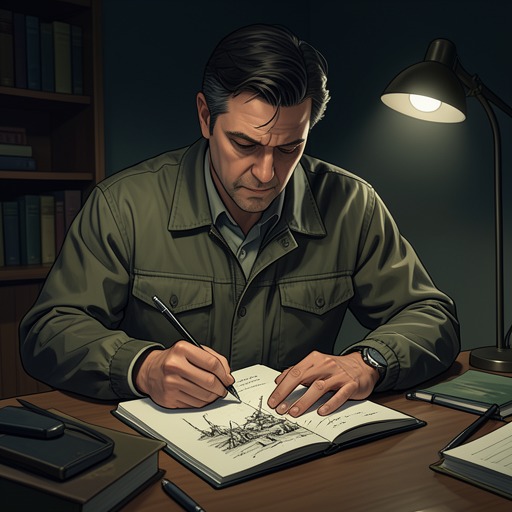
A smaller act of remembrance makes the same tension immediate in the camp. After Rabbit Hendricks dies during the cholera outbreak, his sketchbook is brought to Dorrigo Evans as the possessions of the dead are prepared for burning under the camp’s contagion rules. Dorrigo tells the pyre maker to burn it. Later, when Bonox Baker invokes the customary appeal to remember, Dorrigo answers that everything is eventually forgotten and that living now matters more. The exchange does not settle whether forgetting is mercy, necessity, or evasion. Instead, the personal loss of Rabbit’s sketchbook, Jimmy’s altered memories, and the absent names of railway laborers leave the question open: what survives depends not only on what happened, but on who is able to remember and whose remembrance is preserved.